


Things to Do in Jaipur in 3 Days: The Complete Day-by-Day Itinerary

Three days in Jaipur is the sweet spot. One day barely scratches the surface. Two days gets you the headline forts and markets. But three days? That’s when Jaipur stops feeling like a checklist and starts feeling like a city you actually know.
This itinerary builds on the same logic as our two days in Jaipur guide but goes further. Day 1 covers the royal heritage circuit at a proper pace – Amber Fort without rushing, City Palace with time to read the exhibits, Johari Bazaar without watching the clock. Day 2 shifts to panoramic heights and full cultural immersion: Nahargarh sunrise, the military architecture of Jaigarh, and a full evening at Chokhi Dhani. Day 3 is where most itineraries give up – we don’t. Galtaji Temple at dawn, Patrika Gate’s colour-soaked arches, and a farewell dinner worth planning around.
Each day follows the same logic: active mornings before the Rajasthan heat peaks, air-conditioned or shaded afternoons, and unhurried evenings. Named restaurants, real ticket prices, honest pacing notes, and transport costs throughout.
Only have one day? See our complete one day in Jaipur itinerary. Have two days? Our two days in Jaipur guide covers the core circuit. For everything Jaipur offers, visit our complete things to do in Jaipur guide.
Key Takeaways
- Three days covers Jaipur’s full arc: hilltop forts, royal palaces, a spiritual gorge temple, and colourful modern landmarks – all without feeling rushed.
- Amber Fort draws over 5,000 visitors daily in peak season (Rajasthan Tourism, 2024) – arrive by 8:30 AM to beat the crowds.
- Day 3’s Galtaji Temple and Patrika Gate are genuine off-the-beaten-path additions that almost no two-day itinerary includes.
- Budget estimate: Rs 10,000-20,000 per person for 3 days covering transport, meals, and major attractions.
- Chokhi Dhani on Day 2 evening is the cultural centrepiece – book in advance on weekends and during peak season.
Your 3 Days at a Glance
Screenshot these tables and use them as your live itinerary. Full descriptions, insider tips, and alternatives follow below.
Day 1: Royal Heritage Circuit
| Time | Stop | Duration | Key Highlights |
|---|---|---|---|
| 7:30 AM | Breakfast – Samrat Restaurant, Chaura Rasta | 30 min | Kachoris, jalebi, masala chai |
| 8:00 AM | Drive to Amber Fort (Jal Mahal photo stop en route) | 30 min | Jal Mahal reflection shot from the road |
| 8:30 AM | Amber Fort | 2.5 hrs | Sheesh Mahal, Ganesh Pol, Maota Lake ramparts |
| 11:15 AM | Drive to old city | 30 min | Aravalli foothills descent |
| 12:00 PM | Lunch – LMB, Johari Bazaar | 1 hr | Rajasthani thali, pyaaz kachori, ghevar |
| 1:30 PM | City Palace | 1.5 hrs | Pritam Niwas Chowk, armory, textile museum |
| 3:15 PM | Jantar Mantar | 1 hr | Samrat Yantra, UNESCO site, golden afternoon light |
| 4:15 PM | Hawa Mahal | 30 min | 953-window facade, Wind View Cafe photo spot |
| 5:00 PM | Johari Bazaar walk | 2 hrs | Kundan jewellery, block-print textiles, street food |
| 7:00 PM | Rooftop dinner | 2 hrs | Peacock Rooftop / The Dome / The Dagla |
Day 2: Forts, Heights and Cultural Village
| Time | Stop | Duration | Key Highlights |
|---|---|---|---|
| 6:00 AM | Nahargarh Fort sunrise viewpoint | 45 min | Panoramic Pink City sunrise, free access |
| 7:00 AM | Breakfast – cafe near hotel or Samrat | 45 min | Recharge before the fort loop |
| 8:30 AM | Jaigarh Fort | 1.5 hrs | Jaivana cannon, underground water tanks, rampart views |
| 10:15 AM | Nahargarh Fort interior | 1.5 hrs | Madhavendra Bhawan, nine queen apartments, valley views |
| 12:00 PM | Street food lunch on MI Road | 1.5 hrs | Rawat kachori, LassiWala lassi, imarti sweets |
| 2:00 PM | Albert Hall Museum | 1.5 hrs | Egyptian mummy, Persian carpet, miniature paintings |
| 3:30 PM | Ram Niwas Garden – rest break | 45 min | Shaded benches, fountains, people-watching |
| 5:00 PM | Drive to Chokhi Dhani | 40 min | Tonk Road heading south |
| 5:30 PM | Chokhi Dhani cultural village | 4.5 hrs | Folk dances, craft demos, unlimited Rajasthani thali |
Day 3: Spiritual Gorge, Colour and Farewell
| Time | Stop | Duration | Key Highlights |
|---|---|---|---|
| 6:30 AM | Galtaji Temple (Monkey Temple) | 2 hrs | Dawn puja, holy kunds, Aravalli gorge, resident monkeys |
| 9:00 AM | Breakfast – cafe near hotel | 45 min | Rest before the afternoon loop |
| 10:00 AM | Anokhi Museum of Hand Printing | 1 hr | Block-print archive, live demos, haveli setting |
| 11:30 AM | Patrika Gate and Jawahar Circle Garden | 1.5 hrs | Nine-arch mural gateway, Asia’s largest circular park |
| 1:00 PM | Lunch – Tapri Central or Cafe Palladio | 1 hr | Rajasthani cafe culture, relaxed farewell meal |
| 2:30 PM | World Trade Park or free afternoon | 2 hrs | Modern Jaipur, shopping, rest |
| 5:00 PM | Sunset at Nahargarh or Patrika Gate | 1 hr | Golden hour on fort walls or gate arches |
| 7:00 PM | Farewell dinner | 2.5 hrs | Suvarna Mahal (Rambagh Palace) or Niros, MI Road |
Pace note: This itinerary is full but not punishing. Drop Jaigarh on Day 2 for a slower pace (saves 1.5 hours). On Day 3, the Anokhi Museum and World Trade Park are optional – swap them for a block-printing workshop or a second round of Johari Bazaar shopping.
Day 1: Royal Heritage Circuit
Breakfast at Samrat Restaurant (7:30 AM – 8:00 AM)
Before any fort, feed yourself properly. Samrat Restaurant on Chaura Rasta opens early and sits right on the route to Amber – there’s no logical reason to skip it. Hot kachoris straight from the kadai, flaky and onion-stuffed. Jalebi still glistening with syrup. Samosas with coriander chutney. A glass of masala chai that actually tastes like someone thought about the spice ratio. Budget Rs 80-150 per person. You’ll be on your feet for the next three hours, so eat well.
The drive from Chaura Rasta to Amber takes about 25 minutes via Amer Road. Halfway, you’ll pass Jal Mahal – the Water Palace – floating in Man Sagar Lake. Stop for two minutes and take the photo. You won’t regret it.
Amber Fort (8:30 AM – 11:00 AM)
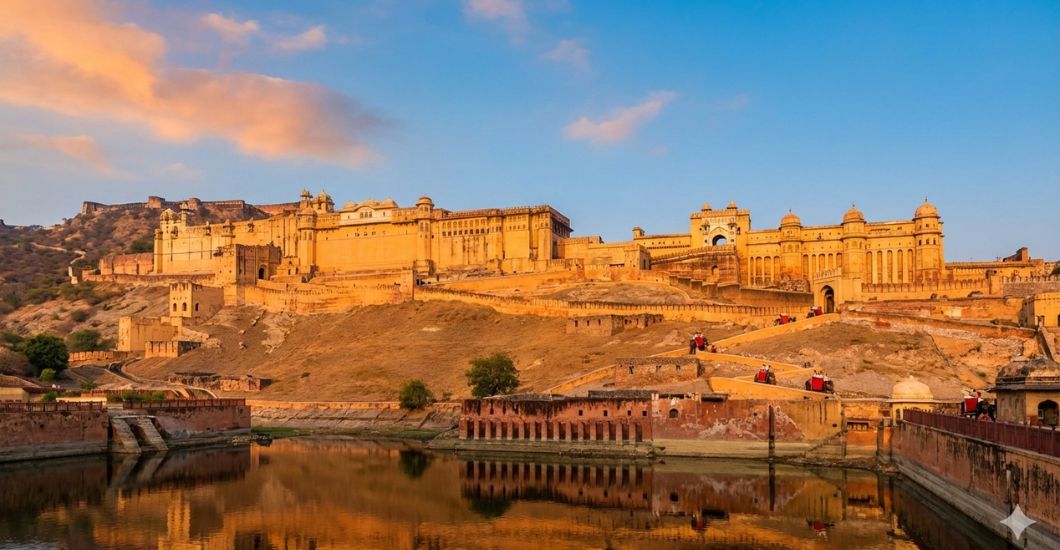
Amber Fort receives over 5,000 visitors on peak-season days (Rajasthan Tourism, 2024). Being here at 8:30 AM means walking through Suraj Pol in near-silence, before tour groups arrive and fill every courtyard with noise. Three days gives you the luxury of arriving before them – use it.
The fort’s layout unfolds through four successive courtyards, each shifting from public ceremony to private royal life. The Diwan-i-Aam opens first: a pillared hall where the maharaja addressed subjects from an elevated throne. Then the Diwan-i-Khas for noble audiences. Then the zenana quarters where the royal household lived, watched, and waited.

The Sheesh Mahal is the room people remember for years. Every centimetre of ceiling and wall is covered with tiny convex mirrors set at calculated angles. Pull out your phone torch and point it upward. The chamber ignites. It’s one of those moments where you understand why 16th-century craftsmen spent years on a single room.
Before leaving, walk to the eastern ramparts for the classic shot: Amber’s honey-gold walls mirrored in Maota Lake below. Morning light makes it. Afternoon crowds ruin it.
Getting Up and Practical Details
- Walk up (recommended): 15-20 min on a paved ramp – best photo opportunities on the climb
- Jeep ride: Rs 400-600 per jeep (fits 6), saves 15 minutes
- Elephant rides: Rs 2,500 per elephant (2 people). Ethically debated – most travellers now prefer walking or jeep
- Tickets: Rs 200 Indians / Rs 1,000 foreigners | Audio guide: Rs 150-200
- Hours: 7:00 AM – 9:00 PM | Light and Sound Show: evenings, separately ticketed
- Time needed: 2-2.5 hours | Guide at the gate: Rs 300-500, worth it for the history
For the full Amber Fort experience – Light and Sound Show, tunnel to Jaigarh, photography spots – see our complete Amber Fort guide.
Lunch at LMB, Johari Bazaar (12:00 PM – 1:00 PM)
Laxmi Mishthan Bhandar has been feeding Jaipur since 1954. That’s not a marketing claim – it’s a fact visible in every third table, where local families are finishing a meal they’ve been eating here for two generations. The multi-story restaurant serves pure vegetarian Rajasthani food without compromise.
Order the Rajasthani thali: dal, curries, gatte ki sabzi, bajra roti, rice, raita, and dessert. The pyaaz kachori and ghevar are the real reasons people come back. Use this break to recharge, review morning photos, and drink enough water before the afternoon palaces.
Want to understand why these dishes exist – desert survival, warrior provisions, festival traditions? Our Rajasthan food guide explains the history behind every dish on that thali.
City Palace (1:30 PM – 3:00 PM)

City Palace is still an active royal residence – the Chandra Mahal remains private to this day. What’s open rewards slow, deliberate looking: the armory museum, the textile gallery with enormous royal robes (the largest belonged to Maharaja Sawai Madho Singh I, who reportedly weighed 250 kg), and a miniature painting gallery where courtly scenes play out in brushstrokes thinner than a human hair.
The Pritam Niwas Chowk courtyard is the palace’s most photographed spot – four gates, four gods, four colour schemes. Peacock Gate for Vishnu. Lotus Gate for Shiva. Green Gate for Ganesh. Rose Gate for Devi. Don’t rush this courtyard. Afternoon light hits the colours well.
Practical Details
- Tickets: Rs 400 Indians / Rs 1,200 foreigners (includes museums)
- Hours: 9:30 AM – 6:30 PM | Dress modestly: shoulders and knees covered
- Time needed: 1.5 hours | Photography allowed in most sections
Jantar Mantar (3:15 PM – 4:15 PM)
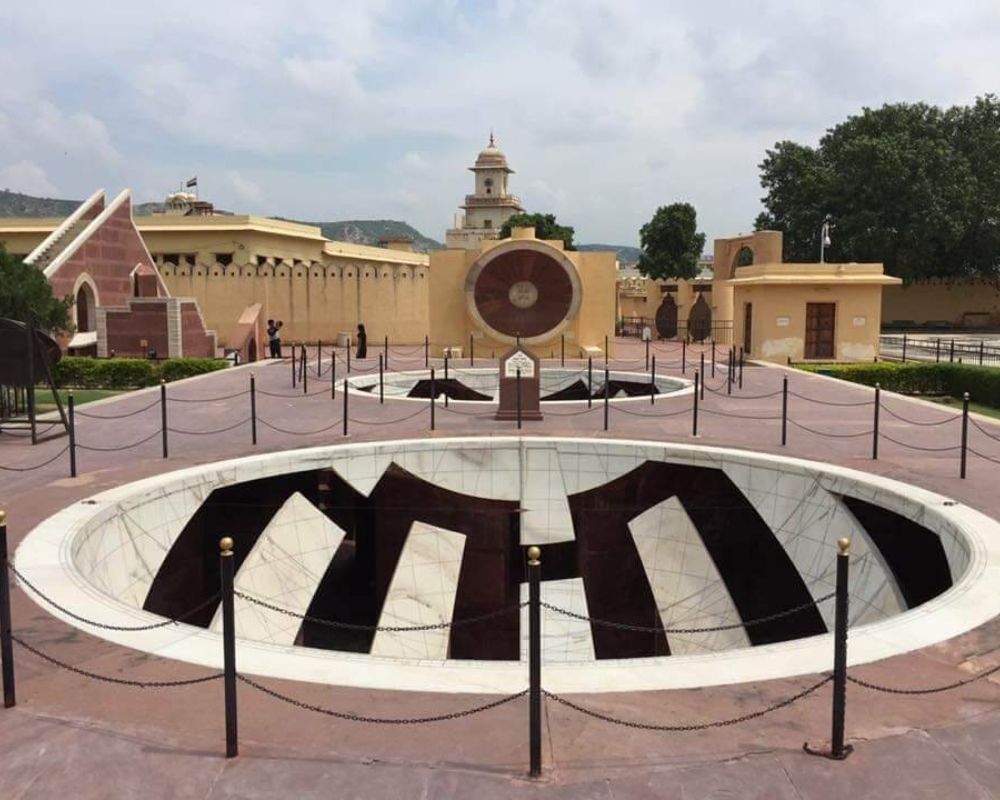
Step next door. Jantar Mantar is a UNESCO World Heritage Site built in 1728 by Maharaja Sawai Jai Singh II – the ruler who also designed Jaipur’s famous grid-planned streets. Nineteen astronomical instruments look like abstract sculpture, but each served a precise purpose: predicting eclipses, tracking celestial bodies, calculating noon to within two seconds.
The Samrat Yantra – the world’s largest sundial – still works. Its shadow moves about 1 mm per second. Late afternoon shadows lengthen and the pink sandstone turns golden. Hire a guide here; the instruments are genuinely impossible to appreciate without explanation.
Practical Details
- Tickets: Rs 550 Indians / Rs 1,700 foreigners
- Hours: 9:00 AM – 4:30 PM | UNESCO World Heritage Site
- Time needed: 45 min-1 hour | Guides at gate: Rs 100-200
Hawa Mahal (4:15 PM – 4:45 PM)

A 30-second walk from Jantar Mantar. The 953-window honeycomb facade was built in 1799 so royal women could observe street life without being seen – the screens allowed air (hawa) to circulate while maintaining purdah. The best photograph isn’t from directly in front. Cross the street, climb to Wind View Cafe, order a cold lemonade, and shoot the full facade from their terrace. The symmetry reads better from height and distance.
Practical Details
- Interior entry: Rs 100 Indians / Rs 600 foreigners
- Hours: 9:00 AM – 5:30 PM | Time needed: 20-30 minutes
Johari Bazaar Evening Walk (5:00 PM – 7:00 PM)

Turn right out of Hawa Mahal and you’re in Johari Bazaar – Jaipur’s oldest jewellery market and one of India’s most sensory streets. Gold-lit display cases. Stacked textiles. The smell of attar and frying kachoris. Kundan and Meenakari craftsmen working on-site in the lanes behind the main shops – ask to watch them set gems without solder, then enamel the reverse in patterns that take years to master.
Beyond jewellery: block-print cotton, blue pottery, lac bangles, Rajasthani puppets. Bargaining note: start at 40-50% of the quoted price, smile through it, be willing to walk away. For a fair-price benchmark, visit Rajasthali government emporium on MI Road – fixed prices there give you a solid reference.
Street food as you walk: fresh jalebi from corner stalls, kulfi from clay-pot vendors, kachori-sabzi from small shops. The bazaar’s energy peaks 6:00-8:00 PM when working locals arrive and the whole street shifts up a gear.
Rooftop Dinner (7:00 PM – 9:00 PM)
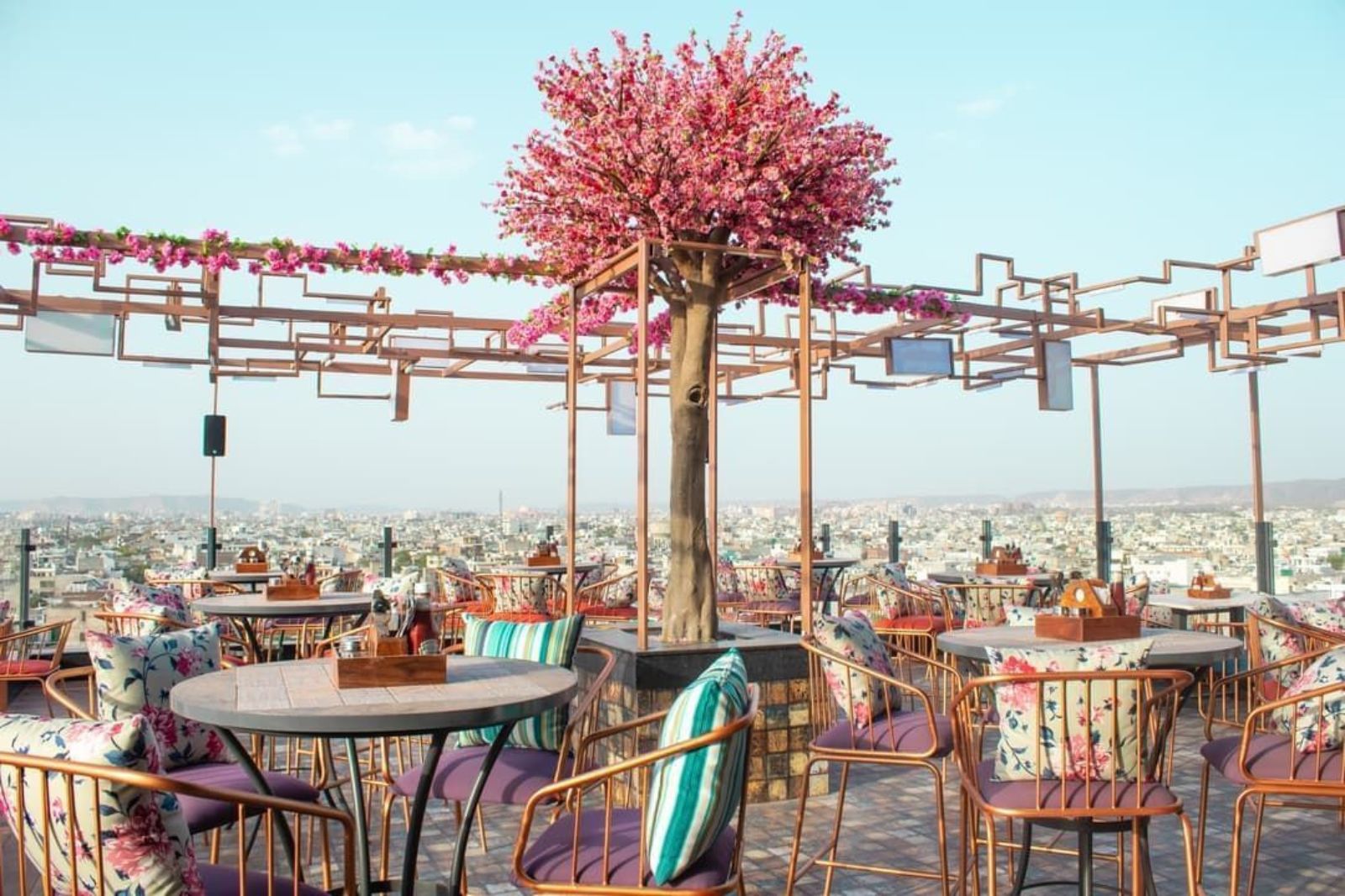
Three days means three chances to try different rooftop restaurants. Start Day 1 with Peacock Rooftop Restaurant (51, Hathroi Fort, Hari Kishan Somani Marg, Ajmer Road) – a Jaipur institution with solid Rajasthani and North Indian food. The terrace fills after 7 PM; arrive early or call ahead.
Alternatives: The Dome on MI Road (contemporary setting, panoramic city views, good for couples), or The Dagla for authentic Rajasthani cooking without tourist-restaurant polish. Order dishes you haven’t tried: laal maas, ker sangri, safed maas, bajra roti. Save room for ghevar or mawa kachori.
Day 2: Forts, Heights and Cultural Village
Nahargarh Fort Sunrise (6:00 AM – 6:45 AM)

At 6 AM the road up to Nahargarh is nearly empty – just your headlights, stray dogs, distant temple bells. The 15-minute drive from central Jaipur ends at a free viewpoint outside the fort walls. No ticket required. You don’t need to go inside yet.
As the sun breaks over the Aravalli ridge, the city transforms: grey to pink to full golden in about 20 minutes. Jal Mahal glints in Man Sagar Lake. You can trace Amber Fort’s roofline on the northern ridge. Temple bells echo up from the valley. For those 20 minutes, this is one of the finest views in all of Rajasthan. It’s free. It takes 30 minutes round-trip. There’s genuinely no reason not to do it.
Breakfast, Then Jaigarh Fort (7:00 AM – 10:00 AM)
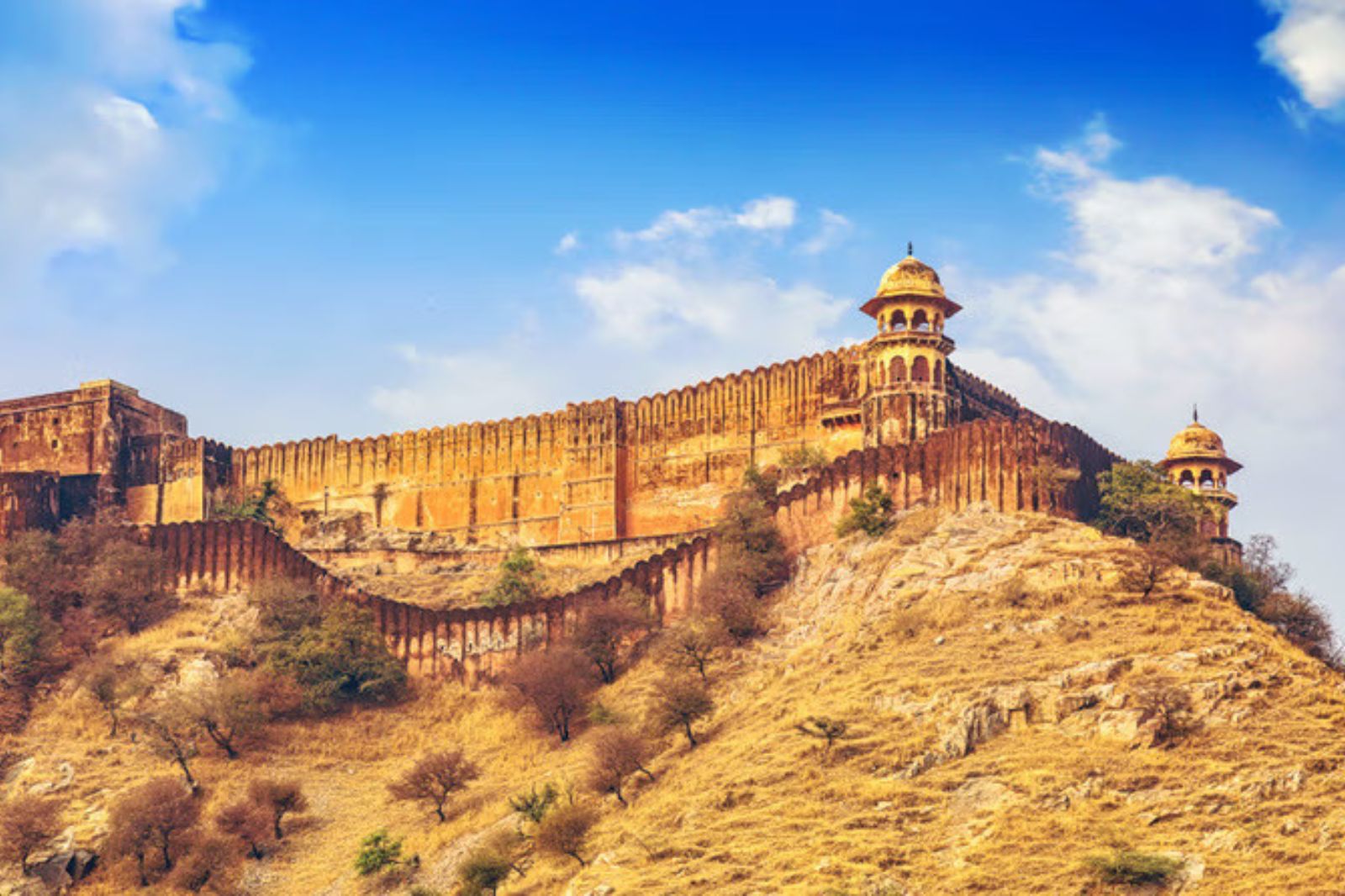
Come down from Nahargarh, grab breakfast at Samrat or a cafe near your hotel, then head to Jaigarh Fort – it opens at 9:00 AM and most visitors arrive later. The drive from Nahargarh to Jaigarh takes under 10 minutes along the ridge road.
Jaigarh is Amber’s military twin – seven kilometres uphill, connected by an underground passage and the same defensive logic. Where Amber showcases royal living, Jaigarh reveals the military machinery that protected it. It’s one of the best examples in Rajasthan’s fort architecture of how residential and military structures worked together.
The centrepiece is Jaivana – cast in 1720, over 20 feet long, weighing 50 tons, mounted on wheels. The world’s largest cannon on wheels. Fired exactly once in testing; the cannonball reportedly landed 35 kilometres away near Chaksu village.
Don’t skip the underground water system. Jaigarh’s engineers built rainwater harvesting channels, storage tanks, and distribution networks that could sustain the garrison through extended sieges. Walk the fortification walls – views of Amber below and the Aravalli valley beyond are genuinely striking.
Practical Details
- Tickets: Rs 150 Indians / Rs 200 foreigners
- Hours: 9:00 AM – 4:30 PM | Time needed: 1.5 hours
- Sturdy shoes required for wall walking; sun protection essential
- Jaigarh-Amber combined ticket available at gate
Nahargarh Fort Interior (10:15 AM – 11:45 AM)

Return to Nahargarh now that it’s open. Built in 1734 as a retreat for the Jaipur royal family, Nahargarh has a different energy from Jaigarh – less military severity, more considered comfort.
The interior’s draw is Madhavendra Bhawan – nine identical apartments, one for each of the maharaja’s queens, arranged symmetrically around a central courtyard. Each suite is the same size, the same layout, the same amenities. No queen could claim superior accommodation. Walk through several and notice how the precision borders on unsettling.
The fort walls extend along the ridge – connected with Jaigarh, they run nearly 36 km in total – offering changing perspectives over city, valley, and hills. The Wax Museum inside is fine for families; skippable for most adult visitors.
Practical Details
- Tickets: Rs 100 Indians / Rs 600 foreigners | Wax Museum: separate ticket
- Hours: 10:00 AM – 5:30 PM | Sunrise viewpoint: free, accessible from dawn
- Time needed: 1-1.5 hours
For the complete Nahargarh experience – the stepwell, Padao Restaurant, sunset views, and the heritage cycling route – see our full Nahargarh Fort guide.
Street Food Lunch on MI Road (12:00 PM – 1:30 PM)
Day 2 lunch is deliberately different from Day 1’s sit-down thali. Today you eat the way Jaipur locals do: on your feet, moving between vendors. Rawat Mishthan Bhandar near Sindhi Camp serves the city’s most famous pyaaz kachori – flaky, onion-stuffed, with tamarind and coriander chutneys. About Rs 25 per piece. Worth every rupee.
LassiWala on MI Road pours thick, creamy lassi in clay pots – sweet, salted, or with malai. Sweet shops: ghevar, mawa kachori, imarti. Buy small quantities of several things, share, and let the discoveries happen. Return to your hotel for a 30-minute rest before the museum – the second-day energy crash is real, and a brief break prevents it.
Albert Hall Museum (2:00 PM – 3:30 PM)

Rajasthan’s oldest museum, designed in 1876 by Sir Samuel Swinton Jacob in the Indo-Saracenic style. The building is half the reason to come: tiered domes, sandstone arches, carved columns – everything warm and golden in afternoon light.
Inside, the collection earns its time. Miniature paintings in hair-thin brushstrokes. A 17th-century Persian garden carpet – one of the finest surviving examples. The Egyptian mummy – one of very few in India. Decorative arts, weapons, tribal crafts, ivory carvings. The armory gallery gives real context to everything you saw at Amber and Jaigarh this morning.
Step outside into Ram Niwas Garden. Shaded paths, fountains, benches where Jaipur locals gather in the late afternoon. A good place to sit, rehydrate, and decide how energetic you feel about Chokhi Dhani tonight.
Practical Details
- Tickets: Rs 100 Indians / Rs 600 foreigners
- Hours: 9:00 AM – 9:00 PM | Photography restrictions inside (check current policy)
- Time needed: 1.5 hours
Chokhi Dhani Cultural Village (5:30 PM – 10:00 PM)

The Day 2 finale. A 30-minute taxi ride south on Tonk Road takes you to Chokhi Dhani – several acres of mud-walled huts, open courtyards, performance stages, and craft workshops. Yes, it’s designed for tourists. The craft demonstrations are still genuine, the folk performances are energetic, and the unlimited Rajasthani thali is a proper feast. Most travellers who skip it wish they hadn’t.
Arrive at 5:30 PM to explore before crowds peak. Potters shaping clay on wheels. Block printers stamping textiles with carved wooden blocks. Henna artists in the courtyard. Fortune tellers. Camel rides. A magic show. A puppet performance.
As evening deepens, the performance stages come alive. Kalbelia dancers spin in black-and-red skirts, their movements tracing the serpentine rhythms of the desert. Ghoomar dancers turn in hypnotic circles, heavy ghagra skirts catching and releasing the light. Bhopa singers perform tales of Rajput heroes to the one-stringed ravanhatta.
Dinner is an unlimited Rajasthani thali on leaf plates – servers refill dishes before you’ve noticed they’re empty. Dal baati churma, gatte ki sabzi, ker sangri, multiple curries, bajra roti, rice, chutneys, and desserts. The evening runs until about 10 PM.
Practical Details
- Location: 20 km south on Tonk Road, Sitapura
- Hours: 5:00 PM – 11:00 PM daily
- Entry: Rs 1,100 per person (includes unlimited dinner + all performances)
- Transport: taxi Rs 800-1,000 round trip; arrange return pickup when you arrive
- Reservations advisable on weekends and peak season (October-March)
- Time needed: 4-5 hours for the full experience
Day 3: Spiritual Gorge, Colour and Farewell
Galtaji Temple at Dawn (6:30 AM – 8:30 AM)
Most two-day Jaipur itineraries end before Galtaji. That’s their loss. This ancient temple complex sits in a narrow Aravalli gorge about 10 km east of the city – its full name is Galav Ashram, after the sage Galav said to have meditated here. Go early: cooler temperatures for the steep climb, fewer visitors, and the possibility of watching dawn puja before the tourist coaches arrive.
Natural springs feed seven sacred kunds (tanks) within the complex. The main Galta Kund is considered especially holy – pilgrims bathe, priests conduct rituals on the ghats, and the whole scene has an authenticity that the tourist-circuit forts simply can’t replicate. Temple galleries are painted floor-to-ceiling with scenes from Hindu mythology: gods, demons, celestial battles, devotional stories – all in vivid colours, none of them restored into blandness.
Hundreds of resident rhesus macaques give the site its popular nickname: the Monkey Temple. They’re harmless unless you feed or provoke them. Keep bags closed, avoid direct eye contact, don’t feed them. Sunrise light in the gorge is exceptional – especially on the painted facades.
Practical Details
- Entry: Free | Tips appropriate for priests and guides inside
- Hours: Open from dawn | Best visited 6:30-9:00 AM to avoid heat and crowds
- Location: ~10 km east of central Jaipur, near Sisodia Rani Garden
- Time needed: 1.5-2 hours | Modest dress required (cover shoulders and knees)
- Footwear: Remove shoes at temple entrance – sandals that slip off easily are ideal
Breakfast, Then Anokhi Museum of Hand Printing (9:00 AM – 11:00 AM)

Come down from Galtaji and have breakfast near your hotel before the Anokhi Museum – one of Jaipur’s most underrated stops. A dedicated museum to the history and craft of hand block printing, housed in a beautifully restored haveli in Amer. The archive includes over 500 original carved wooden blocks spanning two centuries of design evolution, with live demonstrations running most mornings.
If block-printing workshops interest you, this is the best place in Jaipur to arrange one. The museum cafe serves decent filter coffee and a light breakfast. Entry: Rs 10 Indians / Rs 100 foreigners.
Patrika Gate and Jawahar Circle Garden (11:30 AM – 1:00 PM)
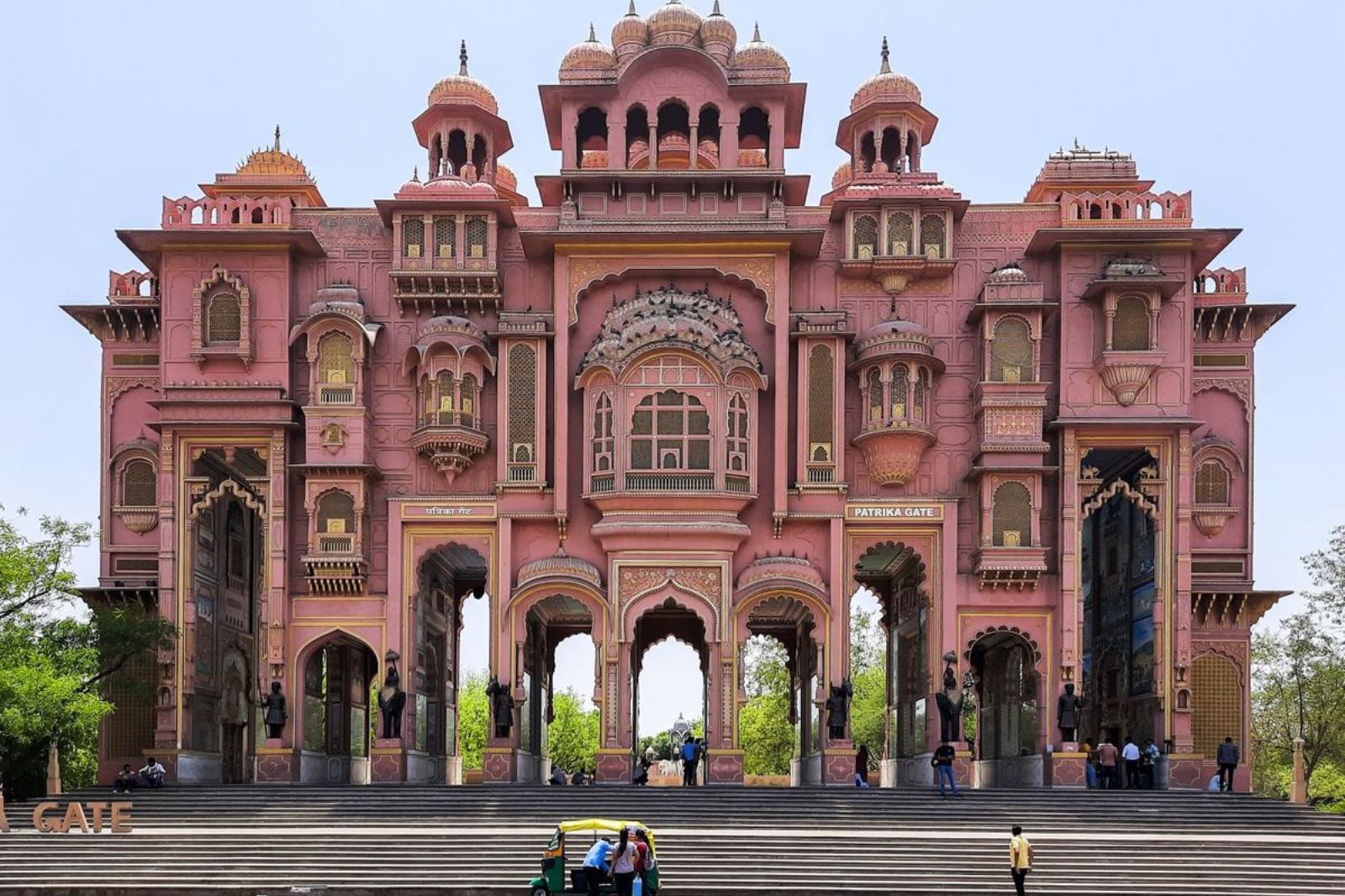
Patrika Gate was completed in 2016 and has become one of Jaipur’s most photographed landmarks. Nine towering arches, each covered in murals depicting a different region’s heritage – Mewar palace scenes, Shekhawati merchant havelis, Marwar desert landscapes. The colour palette is deliberately bold. Morning and early afternoon work best for photography; the arches face east and catch good light until around noon.
Adjacent Jawahar Circle Garden is Asia’s largest circular park – a 2.5-kilometre loop of jogging tracks, landscaped beds, shaded benches, and a musical fountain that operates in the evenings. Walk a section of the circuit. Watch local life: joggers, elderly couples, children on the grass. It’s a reminder that Jaipur is a city of over four million people with a daily rhythm that has nothing to do with tourists.
Farewell Lunch (1:00 PM – 2:30 PM)
Day 3 lunch deserves a proper cafe. Tapri Central (Jhalana Doongri, near Jaipur Zoo) is the city’s most beloved independent cafe – mismatched furniture on a terrace, sandwiches, Rajasthani snacks, and excellent chai. It’s where locals have conversations they want to remember. Cafe Palladio (Narain Niwas Palace Hotel) is the architectural choice: Italian-influenced, beautifully designed, slightly indulgent, appropriate for a three-day farewell meal.
Free Afternoon (2:30 PM – 5:00 PM)
This slot is deliberately open. Three options:
- World Trade Park – Jaipur’s flagship modern mall. Multi-story, air-conditioned, international brands, a food court with every cuisine. After three days of forts and bazaars, two hours of comfortable normality feels like a genuine palate cleanser.
- Block-printing workshop – Sanganer and Bagru, both within 30 minutes of the city, are villages where hand block-printing has been practiced for generations. Several workshops take walk-ins; you leave with something you made yourself.
- Rest at your hotel – fully valid. You’ve covered forts, temples, bazaars, and a cultural village over three days. An hour horizontal before the farewell sunset is good planning, not surrender.
Sunset: Nahargarh or Patrika Gate (5:00 PM – 6:30 PM)
Return to Nahargarh for golden hour – the sunset view is arguably better than the sunrise because the full city below is lit and buzzing. Alternatively, Patrika Gate in late afternoon catches warm directional light that the morning visit doesn’t deliver. Either works. Both are free.
Farewell Dinner (7:00 PM – 9:30 PM)
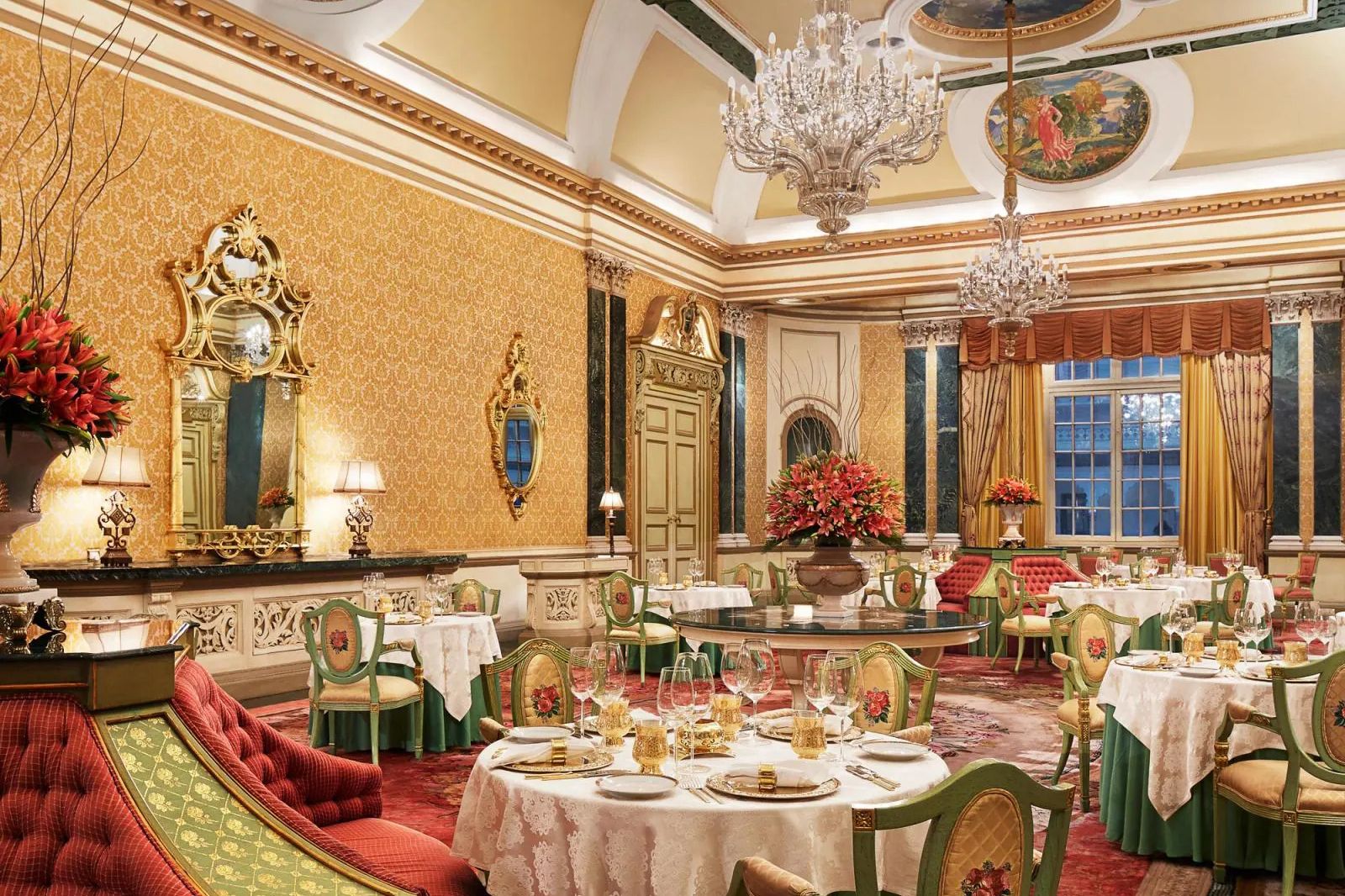
Three nights in Jaipur deserves a proper final dinner. Two options:
Suvarna Mahal at Rambagh Palace – one of India’s most celebrated heritage dining rooms, set in the former state banquet hall of the Jaipur maharajas. The ceiling is gilded, the menu is refined Rajasthani and continental, the staff serve as if they mean it. Book ahead. Budget Rs 3,000-5,000 per person.
Niros on MI Road – the opposite energy entirely. Operating since 1949, Jaipur’s most reliable mid-range restaurant: solid Indian and continental menu, efficient service, the satisfaction of eating somewhere that’s earned its reputation over 75 years without trying. Budget Rs 800-1,500 per person.
Practical Planning Notes
Getting Around
A full-day taxi with driver (Rs 2,500-3,500/day) is the most practical option. Three days covers roughly 120-150 km total. Having a driver waiting at each stop saves the mental overhead of finding autos all day. If you’re planning a broader 3-day Rajasthan itinerary beyond Jaipur, your driver can often be arranged to continue for the full trip.
Budget Estimate (Per Person, 3 Days)
| Expense | Budget | Mid-Range |
|---|---|---|
| Transport (3 days, private taxi) | Rs 4,500 | Rs 9,000 |
| Attraction tickets (Indian prices) | Rs 1,200 | Rs 1,200 |
| Attraction tickets (Foreign prices) | Rs 6,000+ | Rs 6,000+ |
| Meals (3 days, all included) | Rs 2,500 | Rs 6,000 |
| Chokhi Dhani entry | Rs 1,100 | Rs 1,100 |
| Shopping and incidentals | Rs 1,000 | Rs 3,000 |
| Approximate total (Indian prices) | Rs 10,300 | Rs 20,300 |
| Approximate total (Foreign prices) | Rs 15,100+ | Rs 26,100+ |
What to Wear and Bring
- Comfortable walking shoes – 10,000-18,000 steps daily across uneven fort surfaces, gorge paths, and bazaar lanes
- Modest clothing for temples and palaces (cover shoulders and knees; a dupatta or scarf at Galtaji makes entry easy)
- Sun protection: hat, sunglasses, SPF 50+ sunscreen – essential April through September
- Light jacket for early mornings October-March and air-conditioned museums
- Power bank – three full days of photos drain batteries fast
- Water bottle – refill at restaurants and cafes rather than buying plastic all day
- Small daypack for layers, sunscreen, water, and bazaar purchases
Best Time to Visit
October to March is peak season: cool days (15-25 degrees C), clear skies, all attractions fully operational. Book accommodation and Chokhi Dhani in advance – especially around Diwali (October/November) when Jaipur is at its most festive and most crowded. April to June is hot (35-45 degrees C) but uncrowded and cheaper; start each day by 7 AM and retreat indoors between noon and 4 PM. July to September brings the monsoon: dramatic clouds, green Aravallis, moderate temperatures, but some fort trails become slippery.
Frequently Asked Questions
Is 3 days enough to see Jaipur?
Yes – comfortably. Three days covers Amber Fort, Jaigarh, Nahargarh (sunrise and interior), City Palace, Jantar Mantar, Hawa Mahal, Johari Bazaar, Albert Hall Museum, Galtaji Temple, Patrika Gate, and a full evening at Chokhi Dhani – all at a pace that doesn’t feel rushed.
What’s the best order to visit Jaipur’s forts over 3 days?
Amber Fort first on Day 1 morning (before crowds), then Jaigarh Fort directly uphill on Day 2 (the drive takes under 10 minutes), then Nahargarh Fort interior on Day 2 morning after the 6 AM sunrise viewpoint.
How much does 3 days in Jaipur cost?
Budget travellers: Rs 10,000-13,000 per person (guesthouses, street food, shared transport, major attractions). Mid-range: Rs 20,000-28,000 (comfortable hotels, restaurant meals, private driver, Chokhi Dhani). Foreign tourists pay significantly higher entry fees.
Do I need to book anything in advance for 3 days in Jaipur?
Chokhi Dhani benefits from advance booking on weekends and during peak season (October-March). The Suvarna Mahal farewell dinner at Rambagh Palace needs a reservation 2-3 days ahead. For Amber Fort, City Palace, Jantar Mantar, and Albert Hall, buy at the gate.
Is Galtaji Temple safe to visit?
Yes. Galtaji is an active pilgrimage site visited daily by local devotees. The resident monkeys are harmless if you don’t feed or provoke them. Go early (6:30-9:00 AM), dress modestly, remove shoes at the temple entrance, and keep bags closed.
What are the must-try foods over 3 days in Jaipur?
Day 1: Rajasthani thali at LMB, kachoris at Samrat, rooftop dinner (laal maas, ker sangri). Day 2: MI Road street food (pyaaz kachori at Rawat, lassi at LassiWala), unlimited thali at Chokhi Dhani. Day 3: chai at Tapri Central, farewell dinner at Niros or Suvarna Mahal.
What if I only have 2 days?
See our complete two days in Jaipur itinerary – it covers Amber Fort, Jaigarh, Nahargarh sunrise, City Palace, Jantar Mantar, Hawa Mahal, Johari Bazaar, Albert Hall Museum, and a full evening at Chokhi Dhani in two well-paced days.
Where should I stay for 3 days in Jaipur?
Near the old city (Bani Park, Hathroi area) for walking access to Day 1 afternoon stops. C-Scheme for modern hotels and restaurants. MI Road splits the difference with varied accommodation at every price point.


